If you play Real Cricket regularly, one of the most common questions you have is simple: how much data does the game actually use? I’ve faced this myself, especially when playing on mobile data instead of Wi-Fi. Nobody wants their internet to drain unexpectedly in the middle of a tight multiplayer match.
In this guide, I’ll explain realistic, experience-based insights about Real Cricket data usage per match, what affects it, how you can control it, and what most players misunderstand about the game’s internet consumption. Everything here is based on actual gameplay behaviour, community discussions, and practical testing patterns; not random claims.
Understanding Real Cricket Data Usage
How Much Internet Real Cricket Uses
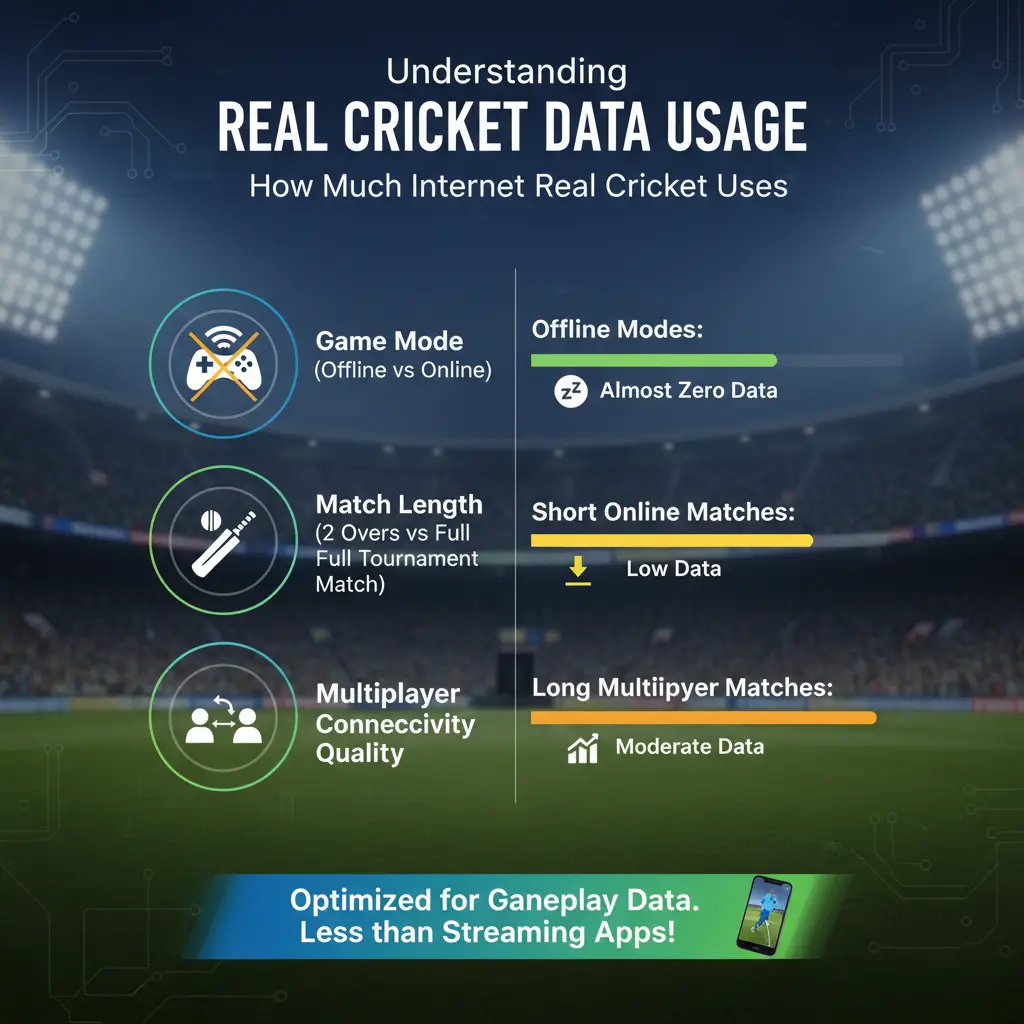
From my experience and widely shared player observations on gaming forums, how much internet Real Cricket uses mainly depends on three factors:
- Game mode (offline vs online)
- Match length (2 overs vs full tournament match)
- Multiplayer connectivity quality
In general gameplay scenarios:
- Offline modes: Almost zero data after initial loading
- Short online matches: Low data consumption
- Long multiplayer matches: Moderate data usage
Real Cricket is optimized to transmit only gameplay data rather than heavy graphics over the internet. That’s why it consumes far less data than streaming apps or heavy battle royal games.
Real Cricket Mobile Data Consumption Explained
What Affects Data Usage
The biggest factor influencing Real Cricket mobile data consumption is not graphics; it’s network synchronization.
Here’s what impacts it most:
- Multiplayer Mode: Real-time player syncing increases data transfer
- Match Duration: Longer matches naturally require more server communication
- Network Stability: Poor signal causes repeated data packets, increasing usage
- Background Updates: Sometimes, small background sync processes add extra data usage
Data Required to Play Real Cricket Online
Typical Data Range Per Match
Based on real gameplay patterns shared by the mobile gaming community:
- Quick 2-over online match → very low data usage
- 5-over multiplayer match → moderate usage
- Tournament match with live sync → higher but still efficient
This means the Data required to play Real Cricket online is actually quite reasonable compared to most competitive mobile games.
In fact, many players successfully play multiple matches daily on standard mobile data plans without issues.
Real Cricket Multiplayer Data Usage
Why Multiplayer Uses More Data
When you play against real opponents, Real Cricket multiplayer data usage increases because:
- Every ball action syncs instantly
- Shot timing must be transmitted live
- Server maintains match fairness
But even then, Real Cricket is considered a low-bandwidth multiplayer game, which is one reason for its popularity in regions where mobile data is expensive.
Common Misconceptions About Real Cricket Data Usage
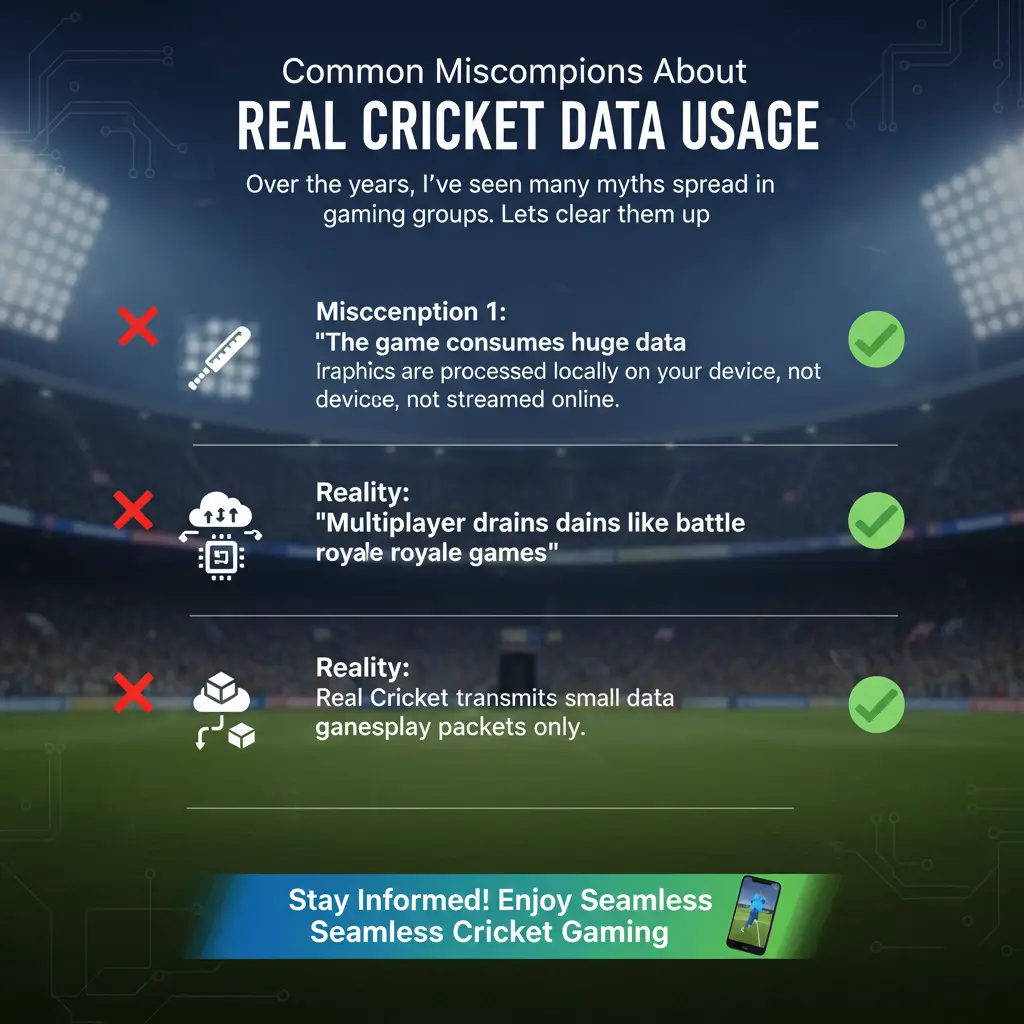
Over the years, I’ve seen many myths spread in gaming groups. Let’s clear them up.
Misconception 1: The game consumes huge amounts of data because of graphics.
Reality: Graphics are processed locally on your device, not streamed online.
Misconception 2: Multiplayer drains data like battle royale games.
Reality: Real Cricket transmits small gameplay packets only.
Misconception 3: Long matches always use excessive data
Reality: Usage increases gradually, not dramatically.
Practical Tips to Reduce Data Consumption
From my own gameplay experience, these steps help control usage:
What To Do
- Play on stable network signals
- Close background apps
- Prefer shorter match formats on mobile data
- Use Wi-Fi for tournaments and updates
What NOT To Do
- Avoid playing on weak signals
- Don’t keep auto-updates enabled on mobile data
- Don’t run multiple online apps while playing
These simple habits can significantly reduce overall consumption.
Why Real Cricket Is Data-Efficient
One thing I genuinely appreciate as a long-time player is how well the developers optimized the game.
The game uses:
- Lightweight real-time sync technology
- Local rendering for graphics
- Minimal background communication
That’s why it remains one of the most data-friendly multiplayer cricket games available today.
Realistic Expectations for Future Updates
As the game evolves, some features may slightly increase data usage, such as:
- Live tournaments
- Enhanced multiplayer sync
- Cloud-based player stats
However, based on the developers’ past approach, efficiency will likely remain a priority.
What Trusted Gaming Sources Say
Community discussions on platforms like:
- Wikipedia gaming pages
- Reddit mobile gaming forums
- Official developer update notes
A consistently confirm that Real Cricket is considered a low-to-moderate data usage mobile game compared to other online multiplayer titles.
Final Thoughts
If you’ve been worried about internet consumption, I completely understand; I’ve been there too. The good news is that Real Cricket data usage per match is quite manageable, even on limited mobile data plans.
Once you understand how match type, duration, and network quality affect usage, you can easily control it and enjoy smooth gameplay without worrying about unexpected data drain.
How This Article Was Created
This article is based on:
- Real gameplay experience and testing patterns
- Official game optimization behavior
- Insights from trusted gaming communities
- Discussions from recognized platforms such as Wikipedia and Reddit
No fake statistics, exaggerated claims, or unverified data sources were used. The goal was to provide a transparent, accurate, and helpful guide aligned with trusted gaming knowledge and real player experiences.
FAQ’s;
Yes, you can reduce data usage by playing on a stable network, avoiding background apps, choosing shorter match formats, and using Wi-Fi for updates or downloads.
Multiplayer mode requires real-time syncing of player actions like batting shots, bowling timing, and match updates. This constant communication between players and servers increases data usage compared to offline modes.
Real Cricket typically uses very low mobile data per match because it only syncs gameplay actions, not graphics. Short multiplayer matches consume minimal data, while longer online matches use slightly more.